A deep dive into how a seasonal Halloween Store is planned, merchandised, staffed, and staged — perfect for Halloween fans, DIYers, and small retailers looking for inspiration.
Why Seasonal Pop-ups Matter
Have you ever walked past a vacant storefront in August and then—poof—by September it’s transformed into a full-on haunted emporium? Seasonal pop-ups, especially Halloween stores, are retail theater at its best. They tap into a short, intense window of consumer excitement and turn it into a shopping experience that feels urgent, fun, and a little bit spooky. For fans of DIY, arts & crafts, and holiday living, a Halloween Store isn’t just a place to buy a costume — it’s a creative playground.
The cultural pull of Halloween
Halloween is part nostalgia, part spectacle. It’s where craft meets commerce: people want memorable costumes, elaborate decor, and ways to celebrate. That demand creates a seasonal economy — and Spirit Halloween-style stores plug right into it, offering trend-forward products and instant inspiration.
Retail strategies for temporary stores
Temporary stores have to get everything right quickly: location, product mix, and customer experience. They can’t afford a slow warm-up. That’s why they use aggressive merchandising, eye-catching windows, and social media teasers to build fast momentum. Let’s break down how that momentum gets made.
Planning Phase: Months Before Opening
It all begins well before cobwebs go up. The planning phase is a sprint that starts months ahead. Think of it as staging a pop-up theater production—except you have spreadsheets and shipping pallets instead of rehearsals.
Market research & site selection
Choosing the right location is huge. Teams analyze foot traffic, local demographics (families? college students?), store vacancy patterns, and proximity to key neighborhoods. Malls, strip centers, and big-box endcaps are common picks because they maximize visibility during the short season.
Permits, leases, and logistics
Temporary leases must be negotiated quickly and precisely. The team secures short-term permits, coordinates delivery windows (often at off-hours), and arranges insurance. There’s also staging for electrical needs—animatronics and lighting gobble power—so planning avoids flash outages once animatronics start shrieking.
Procurement: Sourcing Costumes, Props & Decor
What’s a Halloween Store without dramatic animatronics or a mountain of capes? Procurement teams balance trend forecasting with inventory risk.
Vendor relationships
Strong vendor partnerships matter more here than in regular retail. Suppliers who can deliver large assortments on tight timelines are gold. Seasonal buyers negotiate volume discounts, exclusives, and expedited shipping.
Quality, trends, and safety
Costume trends change fast—viral movie characters, meme-inspired outfits, and classic retro pieces all compete for shelf space. At the same time, product safety and flame-retardant standards are non-negotiable. Buyers must vet materials and certifications before ordering.
Design & Build-Out: The Store as a Stage
Now the visual magic happens. Designers treat the store like a stage set, building a world that customers walk into.
Store layout & customer flow
Layout is planned to guide shoppers from impulse buys to bigger ticket items. Entry zones flash high-impact decor; middle aisles carry costumes by age/size; the back often houses large props and animatronics so customers are drawn deeper inside. Good flow reduces bottlenecks and keeps the energy high.
Theming, props, and lighting
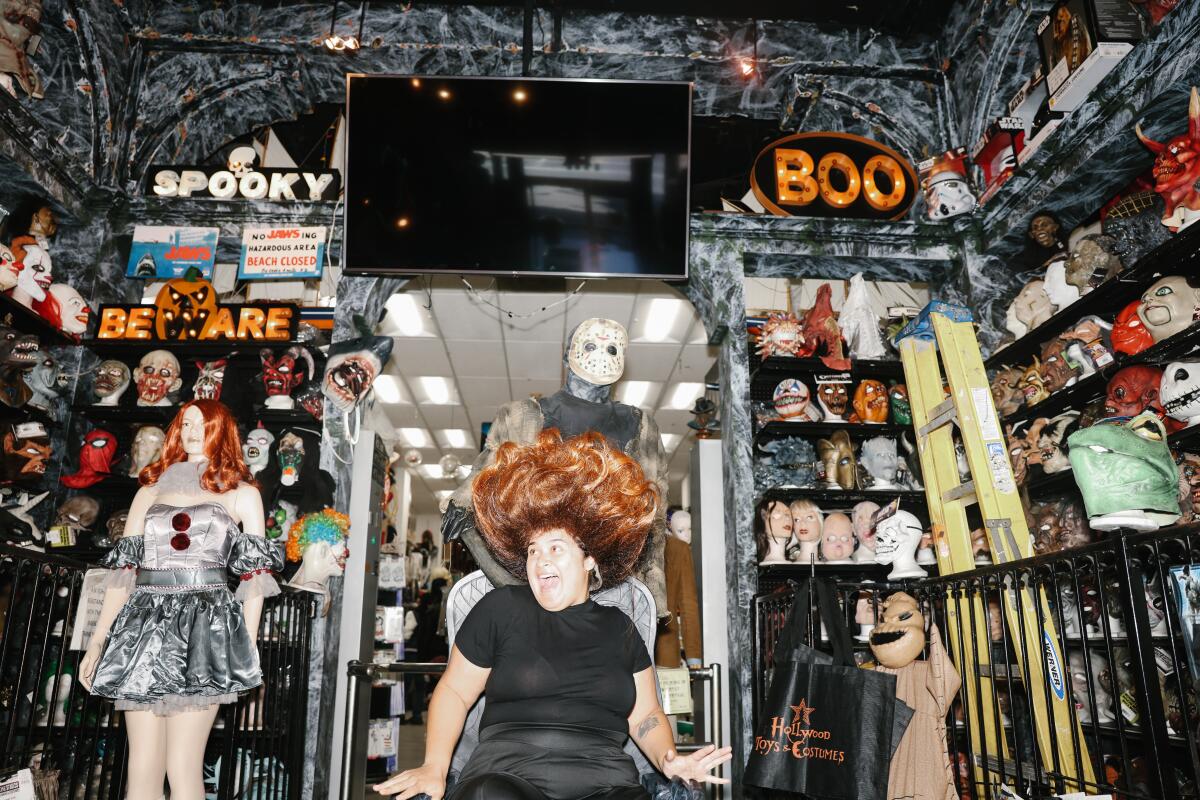
Theming gives the store personality—witchy apothecaries, haunted mansions, or carnival freakshows. Lighting designers use warm ambers and colored gels to cast mood; fog machines and strategic spotlights make props pop. Small touches—cracked mirrors, worn signage, and soundscapes—sell the story.
Interactive displays and safety
Interactive elements (motion-activated skeletons, photo spots) increase dwell time. They require planning: safe distances, stable mounts, and clear signage. The last thing a seasonal store needs is a falling prop or an avoidable injury.
Merchandising: From Rack to Display
Merchandising is where product and theater meet. It’s not just what’s sold—but how it’s shown.
Visual merchandising principles
Anchor products with hero displays—think a life-size animatronic werewolf flanked by werewolf costumes. Grouping related items (makeup, accessories, spray hair) encourages add-on sales. Clear signage for sizes and age groups reduces customer frustration.
Category placement: costumes, décor, animatronics
Costumes are typically front-and-center for impulse buys; décor and animatronics live deeper in the store. Seasonal essentials like fake cobwebs and pumpkin carving kits are near the checkout for last-minute grabs.
Hiring & Training the Seasonal Crew
You need people who can sell, scare (lightly), and troubleshoot squeaky animatronics. Recruiting starts early.
Recruitment timeline
Hiring usually begins 6–8 weeks prior to opening. Roles range from sales associates to logistics staff and in-store decorators. Great teams are flexible, friendly, and comfortable with hectic crowds.
Training: product knowledge and upselling
Training centers on product knowledge (material, safety), sizing help, and cross-sell scripting. For a Halloween Store, training also includes how to operate animatronics safely and how to create memorable customer interactions—because a staff member who helps assemble a costume becomes part of the customer’s story.
Marketing: Creating Buzz
Marketing marries urgency with aesthetics: “Only open X days!” sells faster than “whenever.”
Local outreach and social media
Teams use local ads, geo-targeted social posts, and influencer previews. Behind-the-scenes teaser videos—like unboxing animatronics or a walk-through of the theme—drive shares. Seasonal hashtags and community events amplify reach.
Events and partnerships
In-store events (costume contests, craft workshops) create foot traffic. Partnerships with local schools or theater groups for donation drives or costume fittings deepen community ties.
Opening Week: Launch Operations
Launch week is the stress test. Inventory is checked, staff runs through routines, and initial customer feedback steers quick adjustments.
Soft opening and inventory adjustments
A soft opening helps teams fix product placement and replenish fast-moving SKUs. Inventory accuracy is critical—there’s little time later to correct ordering mistakes.
Customer experience first week
Early shoppers often provide the best feedback—what’s missing, what’s confusing, and what excites them. Teams iterate fast: moving displays, adjusting signage, or creating new product bundles.
Peak Season: Handling Crowds & Returns
As Halloween nears, the store hums. That’s when systems are stressed and must hold.
Restocking and safety
Efficient restocking schedules and crowd management prevent chaos. Clear aisles and staff directions keep the flow smooth, and extra staffing at checkout reduces long lines.
Returns, exchanges, and costume fit
Fitting issues spike close to Halloween. A fair return policy and on-hand suggestions for tailoring or alternatives keep customers happy and reduce negative reviews.
Technology & Back-Office
Back-office tech keeps the gears turning behind the spooky curtain.
POS systems, inventory, and loss prevention
Modern POS links in-store sales to inventory in real time so buyers can pivot orders. Loss prevention combines camera coverage, trained staff, and smart displays to reduce shrink.
Data for next year
Sales patterns, hot SKUs, and customer questions become next year’s playbook. Post-season analysis refines buying and layout decisions.
Sustainability & Waste Management
Seasonal retail can create waste—costumes, packaging, unsold stock—but many teams are changing that.
Recycling costumes and packaging
Programs to collect gently used costumes for donation or recycling reduce landfill waste. Some stores partner with nonprofits to redistribute costumes to families in need.
Donations and community giveback
Unsold but usable items often go to shelters, schools, or community groups. It’s both ethical and PR-positive.
Takedown & Post-Season
When November arrives, the quick teardown begins—efficient and systematic.
Decommissioning the store
Teams dismantle sets, pack animatronics (with documentation), and make the space ready for the next tenant. Quick timelines mean precise labeling and storage practices.
What happens to unsold inventory
Unsold inventory can be returned to vendors, sold at clearance, or repurposed for next season. Smart teams run clearance strategies that avoid glutted warehouses later.
What Makes the Experience Magical
At the end of the day, it’s people and details.
Staff stories and customer reactions
Staff who remember a costume idea, help a child try on wings, or fix a prop in ten minutes shape memories. Customers often recall those personal touches more than any sale.
Design choices that create delight
A well-placed mirror, an immersive soundscape, or a friendly staff recommendation can turn a browse into a full Halloween production. That’s the secret sauce.
Tips for DIYers & Small Retailers
You don’t need a national budget to create seasonal magic.
Budget-friendly display ideas
Use vintage frames for signage, repurpose thrift-store mannequins, and cluster lighting to create focal points. Cardboard and paint can make amazing props on a shoestring.
Sourcing props and costumes
Local craft markets, thrift stores, and online marketplaces are treasure troves. Focus on one strong theme per display to make even inexpensive props look intentional.
Conclusion
Running a Spirit Halloween-style Halloween Store is orchestrated chaos—months of planning funneled into a short, electrifying season. From vendor calls and lighting rigs to last-minute costume swaps and smiling staff, the process is a mix of retail discipline and theatrical imagination. For the DIYer, crafter, or seasonal retailer, the magic lies in blending strong logistics with creative storytelling. That’s how a temporary shop becomes a seasonal legend—one cobweb, one animatronic, and one smiling customer at a time.
FAQs
Q1: How long is a typical Halloween pop-up open?
Most seasonal Halloween pop-ups operate for 6–12 weeks, often opening in late August or early September and closing in early November, but exact dates vary by location and strategy.
Q2: What safety checks are important for animatronics and props?
Safety checks include secure mounting, electrical inspection, moisture protection, and clear signage. Regular staff checks during operating hours reduce risks.
Q3: Can unsold costumes be donated?
Yes — many stores partner with local nonprofits or schools to donate gently used unsold costumes after the season ends. This reduces waste and helps the community.
Q4: How do seasonal stores predict what costumes will sell?
They combine trend monitoring (social media, entertainment releases), historical sales data, vendor previews, and local market insight to forecast demand.
Q5: Any quick tips for first-time seasonal retailers?
Start small, focus on a clear theme, plan for strong signage and lighting, and hire personable staff. Cash-flow management and fast decision-making matter more than large inventory early on.
.
- 🎃 Step into the spooky magic! Discover how every Spirit Halloween store transforms from an empty space into a haunted wonderland filled with creativity and chills. 👻
- ✨ Explore the behind-the-scenes secrets of your favorite Halloween store only on RedFortz.com — where every season comes to life!