Introduction: Why AI Is Entering Hollywood
Hollywood has always been obsessed with innovation. From the invention of sound to CGI explosions, every new technology has changed how stories come alive on screen. Now, in 2025, the buzz is all about AI in filmmaking 2025. But what does that really mean for movies, directors, and us—the audience?
The Evolution of Filmmaking Technology
From Practical Effects to CGI
Remember the days when dinosaurs in Jurassic Park amazed audiences? Back then, mixing practical effects with computer-generated imagery (CGI) was revolutionary. Filmmakers realized technology could make the impossible feel real.
The Digital Revolution in the 2000s
Fast-forward to the early 2000s—digital cameras replaced film, making movies cheaper and faster to produce. Editing software also leveled up, letting creators tell stories in entirely new ways. This paved the way for today’s AI boom.
AI in Filmmaking 2025: What’s New
Scriptwriting with AI
Writers now have AI assistants that suggest dialogue, structure plots, and even create entire story outlines. Think of it as having a brainstorming buddy who never runs out of ideas. Still, human writers shape the final magic.
AI-Powered Casting Decisions
Studios use AI to analyze audience data and predict which actors would attract the biggest box office numbers. It’s like having an algorithm as a casting director.
Virtual Actors and Digital Doubles
AI can now create lifelike digital doubles of actors. Imagine starring in a blockbuster without ever stepping on set—crazy, right? Some even worry this could mean fewer roles for background actors.
AI in Editing and Post-Production
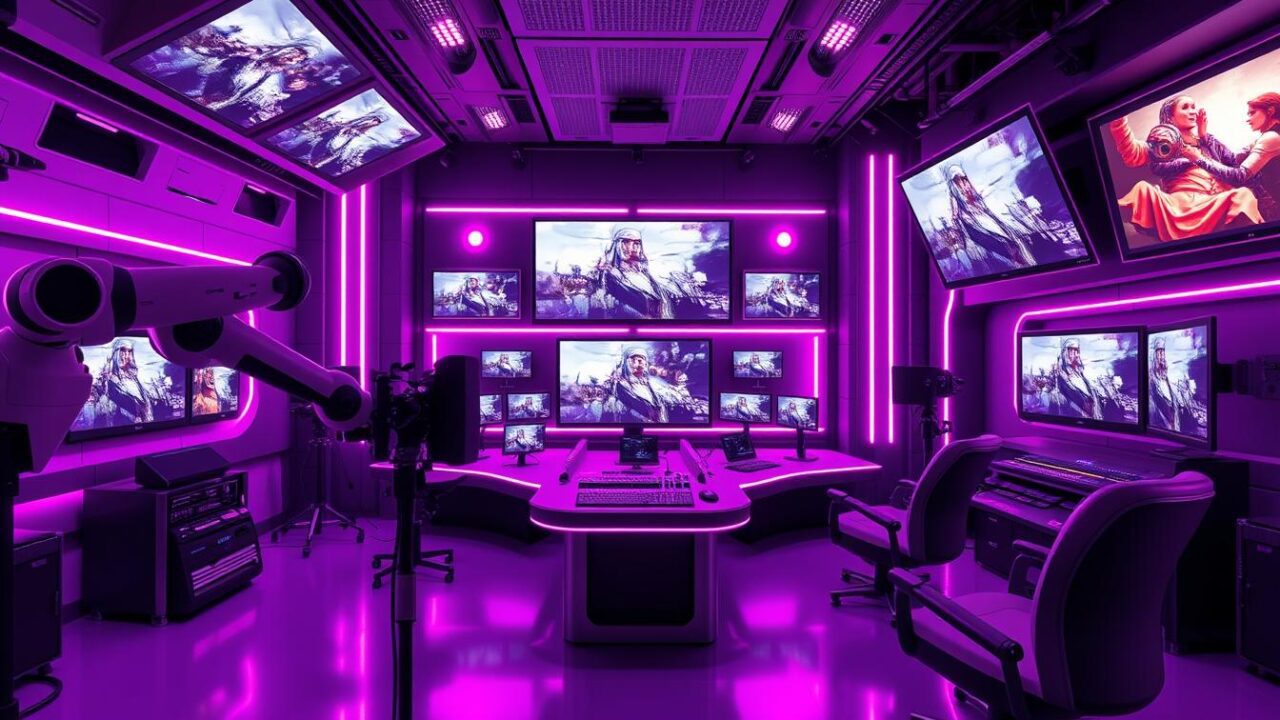
AI tools speed up color correction, special effects, and scene transitions. What once took weeks can now be done in days, freeing directors to focus on creativity rather than logistics.
How AI Is Transforming Creativity
Collaboration Between Humans and Machines
Instead of replacing humans, AI works more like a co-creator. Directors use it to explore new ideas, while writers tweak AI-generated scripts to make them shine.
Can AI Replace Human Storytelling?
AI can generate endless plots, but can it feel emotions? That’s the debate. Movies are about the human experience, and while AI can simulate emotion, it doesn’t live it.
AI and Visual Effects (VFX)
Faster Rendering and Realistic Worlds
Creating realistic battlefields or fantasy landscapes used to take months. With AI, rendering happens at lightning speed, letting filmmakers push creative boundaries.
De-aging and Resurrecting Actors
We’ve already seen de-aged characters in Marvel movies. In 2025, AI makes it seamless. Studios can even “resurrect” legendary actors for new roles, sparking both excitement and ethical debates.
AI in Movie Marketing
Personalized Trailers and Ads
Imagine scrolling Netflix and seeing a trailer cut just for you—highlighting romance if you love love stories or action if you’re an adrenaline junkie. AI makes hyper-personalized marketing possible.
Predicting Box Office Success
Studios now run scripts through AI to predict potential revenue. It’s like Hollywood using a crystal ball to decide which movies get funded.
Challenges and Concerns
Ethical Issues in AI Filmmaking
Who owns an AI-generated script—the writer or the software? And what about using a dead actor’s likeness without consent? These questions make the legal side of AI in filmmaking trends tricky.
Job Security in Hollywood
From screenwriters to set designers, many fear losing jobs to machines. While AI creates efficiency, it also sparks anxiety about the future of creative careers.
Case Studies: AI in Hollywood Films
Marvel and AI-driven VFX
Marvel has been at the forefront of experimenting with AI to create jaw-dropping battle scenes and lifelike digital characters.
Netflix and AI-Powered Content Decisions
Netflix famously uses algorithms to greenlight projects. In 2025, AI helps them decide not only what to produce but also how to shape stories for maximum engagement.
The Future of AI in Filmmaking
Will AI Create Entire Movies?
We’re not far from a day when AI could write, shoot, and edit a movie entirely. But would audiences connect with it the same way they do with human-driven films? That’s the million-dollar question.
The Balance Between Art and Tech
The future isn’t about AI versus humans—it’s about collaboration. AI will handle repetitive tasks, while humans continue to provide heart, vision, and emotional depth.
Conclusion
The rise of AI in filmmaking 2025 is reshaping Hollywood in ways we couldn’t have imagined. From scriptwriting to visual effects, AI is no longer science fiction—it’s part of the industry’s DNA. Still, the magic of cinema will always need human creativity at its core.
FAQs
1. Can AI really write entire movie scripts?
Yes, but they often lack emotional depth. Human writers still refine the final script.
2. Will AI replace actors in Hollywood?
Not entirely. While AI can create digital doubles, audiences still crave authentic human performances.
3. How is AI used in editing?
AI automates tedious tasks like color correction and scene transitions, speeding up production.
4. What are the biggest risks of AI in filmmaking?
Ethical concerns, job security, and over-reliance on technology are the main issues.
5. Is AI making movies better or worse?
It depends on who you ask. AI brings efficiency and new creative tools but also raises tough questions about authenticity.